


Howe Sound DJ
How to keep awedding dance floorpacked at aSea-to-Sky wedding
A packed dance floor is not luck and it is not only volume. In Sea-to-Sky weddings, the setting already does emotional work: mountains, forest, farm fields, or a lodge at elevation. Your reception music has to earn the room in that context, with pacing that respects the day you actually planned.
Packed dance floors start before dancing begins
Guest momentum is built during welcome energy, cocktail pacing, dinner tone, and how speeches land. If those chapters feel rushed, chaotic, or sonically harsh, people arrive at the dance floor tired, self-conscious, or scattered. If they feel cared for, oriented, and emotionally connected, they bring that same trust onto the floor.
This is why Howe Sound DJ treats ceremony through reception as one arc. The dance section is the payoff, not a reset button.
Why Sea-to-Sky weddings require atmosphere-first music planning
Mountain and corridor weddings often include travel, weather, elevation, and a crowd that knows each other well. The room may be intimate, or visually stunning, or both. Sound that fights the setting feels cheap. Sound that supports it feels inevitable.
Atmosphere-first planning means asking what the venue is already saying to guests before the first beat drops. A dramatic viewpoint carries different energy than a Brackendale riverside resort or a forest sanctuary. At a riverside setting, the floor often peaks when the arc is concentrated: trust through dinner, lift when the room is ready, and resist dragging the energy past its natural end. The playlist still has to be yours, but the pacing should match how guests actually move through that place.
For venue-specific planning questions, the wedding venue guides are a practical companion to this article.
For editorial proof alongside guides, see Featured Weddings & Dance Floor Stories.
The Roomflow Method
The Roomflow Method is Howe Sound DJ's approach to building a dance floor through emotional pacing, guest trust, familiarity, transitions, timing, and reading the specific room in front of you. It is not a formula printed on a spreadsheet. It is a way of listening to your people and protecting the night's emotional truth.
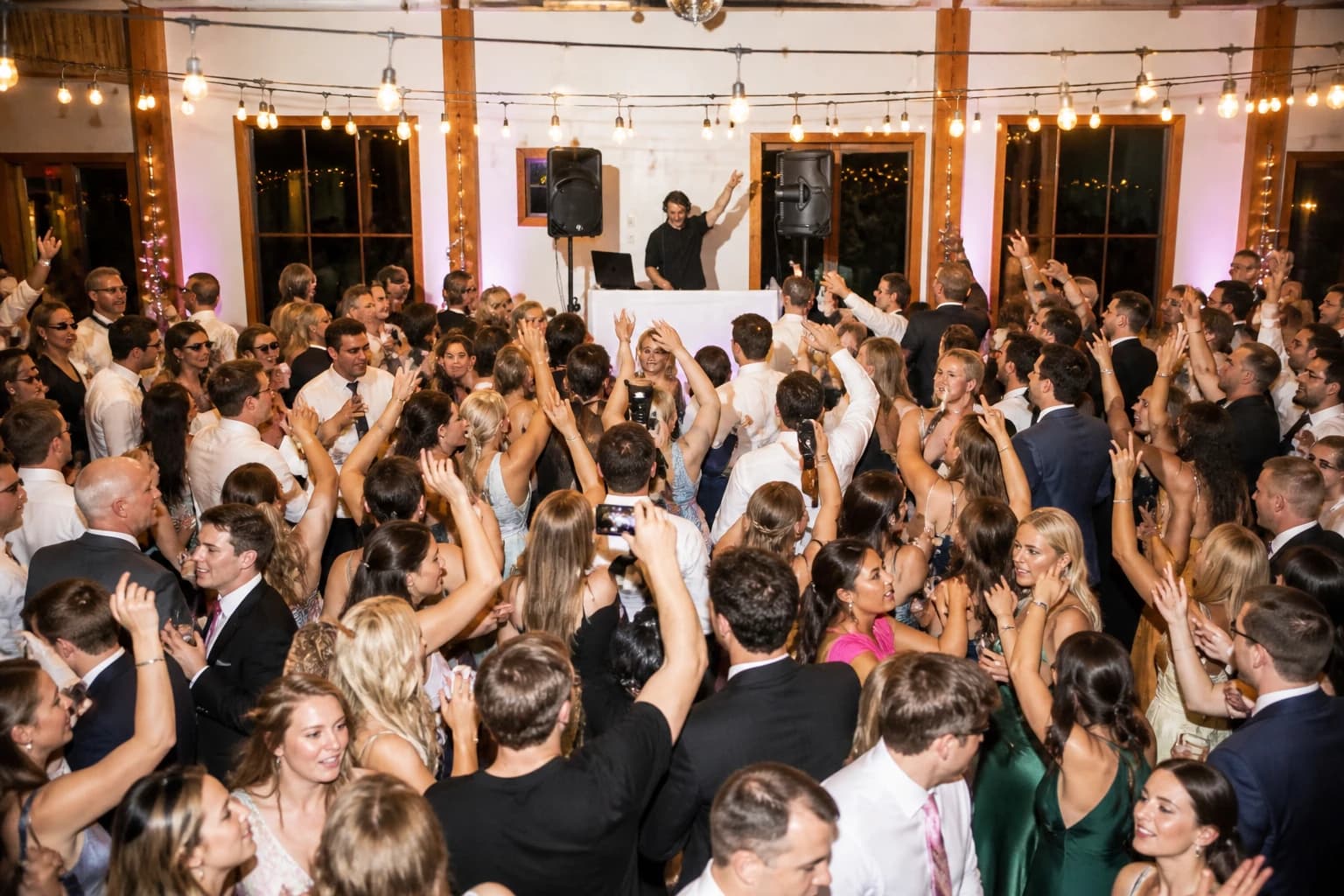
- Earn the room before asking it to move. Warmth and clarity early create permission to celebrate later.
- Build from recognition before intensity. Shared memories in music lower the social barrier to dancing.
- Protect the couple's taste without isolating guests. Your wedding should sound like you, and still invite your favorite people in.
- Use transitions as emotional bridges. The blend between songs is where trust is won or lost.
- Match the venue's atmosphere before changing its energy. Honor the setting, then open the next chapter when the room is ready.
- Keep momentum human, not mechanical. The goal is connection, not a metronome stuck on "high."
Ceremony, cocktails, dinner, speeches, and dance floor are one emotional arc
When couples split the day into disconnected vendors and disconnected vibes, guests feel the seams. A cohesive arc means dinner music supports conversation, speeches are heard cleanly, and the shift into dancing feels like a natural next page, not a hard cut into a different event.
Practically, that means timeline conversations matter as much as "banger" lists. If you want help shaping that arc, wedding DJ packages spell out how planning connects to the day-of support.
Why "bangers only" still needs timing
High-energy reception language is honest for couples who want a real party. The nuance is that energy lands best when the room is ready to receive it. The same track at the wrong moment can clear a floor; the right track after the right emotional runway can keep guests there for hours.
This is room-reading in action: not performing for Instagram, but watching how your actual friends and family respond in real time.
How couples can help create the right conditions
Share the honest age mix, the songs that matter to your history, and the moments you are willing to protect, even if they are not "cool." Name the emotional temperature you want: elegant, wild, tender, rowdy, or a believable blend.
If you are early in planning, say so. If you already know your venue, bring it. Couples who communicate clearly get a soundtrack that feels personal without feeling random.
What to ask your DJ before booking
- How do you build energy when guests are shy or fragmented?
- How do you handle outdoor ceremony or speech audio in mountain weather?
- How do you balance must-plays with reading the room?
- What does your planning process look like the month before the wedding?
- How do you protect the couple's taste without losing the crowd?
If the answers feel template-driven, keep looking. If they sound like practical expertise grounded in real weddings, you have a clearer picture of how that DJ works. Wedding DJ reviews are one place to see how that shows up after the fact.
Check your date. If it is open, book a consult.
The date check answers immediately. If Patrick is available, use the consult to talk through your wedding, your crowd, and what working together would look like.

Prefer to message first? Use contact.